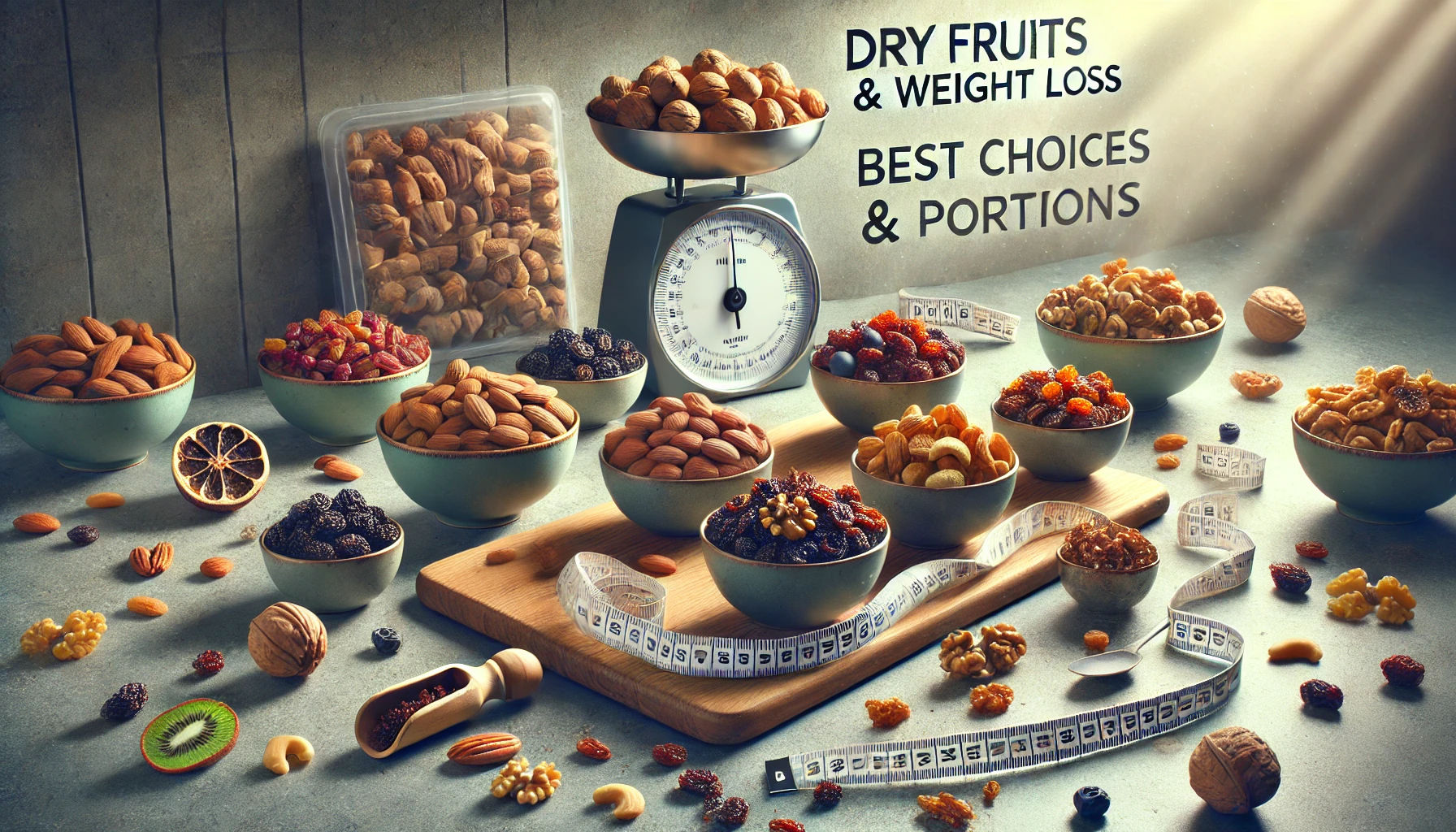
When it comes to weight loss, incorporating healthy snacks can play a significant role in curbing hunger and providing essential nutrients without overloading on calories. Dry fruits, including nuts and dried fruits, are nutrient-dense and can be an excellent addition to your weight loss journey. But how do they help with weight loss, and which dry fruits should you choose? In this post, we will explore the benefits of dry fruits for weight loss, the best options to include in your diet, and the right serving sizes to ensure you stay on track.
How Dry Fruits Aid in Weight Loss
High in Fiber
- Many dry fruits, such as figs, apricots, and prunes, are rich in fiber. Fiber helps promote feelings of fullness, reducing overeating and snacking between meals. It also supports digestion and helps maintain a healthy gut, which is crucial for effective weight management.
Packed with Protein
- Dry fruits like almonds and cashews contain a good amount of protein, which is essential for muscle building and fat loss. Protein also boosts metabolism and helps reduce cravings, contributing to a balanced and healthy weight loss plan.
Healthy Fats for Satiety
- Nuts, particularly walnuts and almonds, are rich in healthy fats. These fats help in controlling hunger and preventing unhealthy food cravings. Unlike unhealthy trans fats, the monounsaturated and polyunsaturated fats in nuts promote heart health while keeping you fuller for longer.
Natural Sugar for Energy
- Dried fruits like raisins, apricots, and dates provide natural sugars that can offer a quick energy boost without spiking blood sugar levels. These sugars, when consumed in moderation, can help maintain energy levels while aiding in weight loss by providing healthier alternatives to sugary snacks.
Low Glycemic Index
- Many dry fruits have a low glycemic index (GI), meaning they release sugar slowly into the bloodstream, preventing blood sugar spikes. A balanced blood sugar level is essential for weight management, as it reduces the likelihood of storing excess fat.
Best Dry Fruits for Weight Loss
Almonds
- Almonds are one of the best choices for weight loss due to their high protein and healthy fat content. A small handful of almonds (about 10-12 pieces) provides a satisfying snack without excess calories. The combination of protein and fiber makes almonds excellent for curbing hunger and controlling overall calorie intake.
Walnuts
- Walnuts are rich in omega-3 fatty acids, which help in reducing fat and supporting metabolism. They also contain protein, which keeps you feeling full longer. A small portion of walnuts (around 7-8 pieces) can provide lasting energy and reduce cravings.
Cashews
- Cashews are lower in fat compared to other nuts but still rich in protein and minerals like magnesium, which helps in muscle building and fat burning. A small serving of cashews (10-12 pieces) is an ideal snack when trying to lose weight.
Raisins
- Raisins are naturally sweet and a great source of fiber. They also contain iron, which helps improve oxygen flow and supports your workouts. A small handful (about 30g) of raisins makes for a low-calorie snack option while satisfying your sweet cravings.
Dried Apricots
- Dried apricots are low in calories but high in fiber and antioxidants. They are a great choice to help keep you full between meals. A serving size of about 4-5 dried apricots provides essential nutrients without adding too many calories.
Figs
- Figs are rich in fiber and antioxidants, making them great for digestive health and weight management. A small serving (2-3 figs) provides natural sweetness and a feeling of fullness, preventing overeating.
Ideal Serving Sizes for Weight Loss
- Almonds: 10-12 almonds per day
- Walnuts: 7-8 walnuts per day
- Cashews: 10-12 cashews per day
- Raisins: 30g (about a small handful) per day
- Dried Apricots: 4-5 dried apricots per day
- Figs: 2-3 figs per day
These serving sizes ensure that you get the benefits of dry fruits while maintaining a calorie-controlled diet. Overconsumption of dry fruits can lead to excess calorie intake, so it’s important to enjoy them in moderation.
How to Include Dry Fruits in Your Weight Loss Diet
Morning Smoothie
- Add a handful of almonds or cashews to your morning smoothie for a creamy texture and a protein boost that will keep you full throughout the morning.
In Salads
- Toss in a few dried apricots or raisins into your salad for added sweetness and fiber. You’ll feel fuller and more satisfied with every bite.
As a Mid-Day Snack
- Instead of reaching for chips or candy, enjoy a small handful of walnuts or figs as a satisfying snack that won’t derail your weight loss goals.
Homemade Granola Bars
- Make homemade granola bars by mixing dried fruits like raisins and figs with oats, seeds, and nuts. These bars make for a great on-the-go snack that supports weight loss and provides lasting energy.
In Yogurt
- Add dried apricots or figs to a bowl of low-fat yogurt for a nutritious and filling snack. The combination of protein, fiber, and probiotics supports digestion and satiety.
Dry fruits are an excellent addition to a weight loss diet when consumed in moderation. Rich in fiber, protein, healthy fats, and essential vitamins and minerals, dry fruits can keep you feeling full, curb your cravings, and provide a nutrient boost. By choosing the right dry fruits, sticking to recommended serving sizes, and incorporating them into a balanced diet, you can achieve your weight loss goals while enjoying delicious and nutritious snacks.
Disclaimer
This information is for educational purposes only and is based on a compilation of knowledge from various online and offline resources, including books, websites, and research papers. It is not intended as a substitute for professional medical advice. Always consult with a qualified healthcare provider before making any changes to your diet or treatment plan.